Back to products
GLP-2 TRZ
GLP-2 TRZ Price range: $55.99 through $74.99

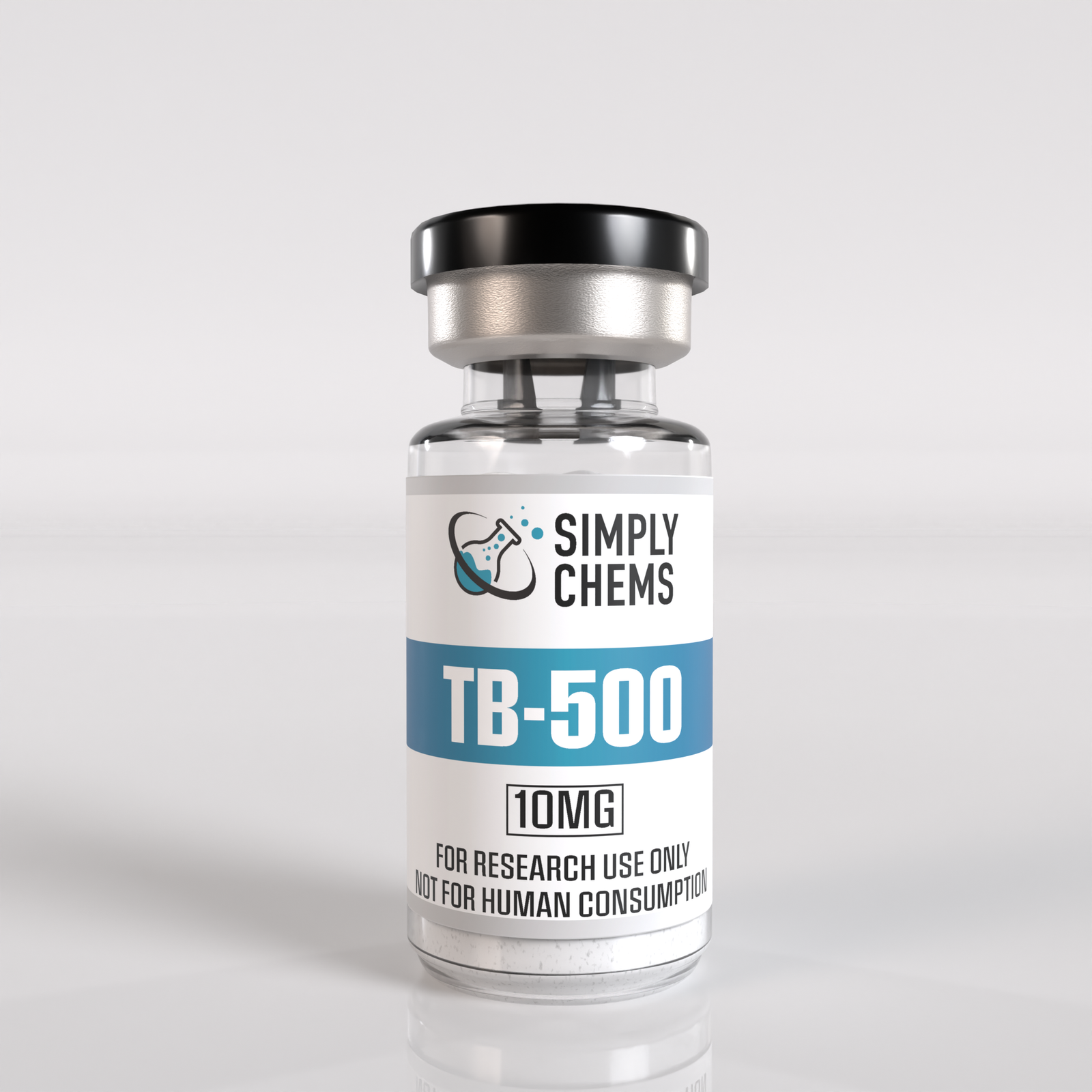
TB-500 | 10mg

$34.99

TB-500 (Thymosin Beta-4 fragment) is a synthetic peptide commonly studied for its potential role in supporting cellular repair, recovery, and tissue regeneration research. This 10mg vial contains high-purity TB-500, intended strictly for laboratory and scientific research purposes only.

Out of stock

SKU: TB5-10-LYO Category:

TB-500 (Thymosin Beta-4 Fragment) is a synthetic research peptide modeled after a naturally occurring region of Thymosin Beta-4, a protein involved in cellular migration and repair. TB-500 is designed to provide scientists with a consistent and stable tool for investigating biological processes related to tissue healing and regeneration.

Research with TB-500 often focuses on its role in:

  • Actin regulation – supporting cell structure and mobility, which are critical in tissue repair.

  • Angiogenesis – formation of new blood vessels to supply nutrients to regenerating tissues.

  • Cellular recovery – pathways involved in muscle, tendon, and connective tissue repair.

Each vial contains high-purity TB-500, formulated for reliability and reproducibility in laboratory research. Its well-characterized activity on actin dynamics makes it a valuable tool for exploring mechanisms of healing and recovery.

This product is intended strictly for laboratory and scientific research only—not for human consumption or therapeutic use.


Technical Information

  • CAS Number: 77591-33-4

  • Molecular Weight (MW): ~4,963 g/mol

  • Synonyms: TB500, Thymosin Beta-4 Fragment, Tβ4 Fragment

Size

20mg

,

30mg

Reviews

There are no reviews yet.

Be the first to review “TB-500 | 10mg”

Your email address will not be published. Required fields are marked *

You have to be logged in to be able to add photos to your review.

CAS Number 77591-33-4
PubChem CID 16132341
Molecular Weight 4,963.4 g/mol
Molecular Formula C212H350N56O78S
Synonyms Thymosin Beta-4, TB4, Tβ4
Storage (Lyophilized) Store in a cool, dry, and dark place. Refrigerate after reconstitution.

Storage Instructions:

  • Lyophilized (Powder): Store at -20°C in a cool, dry, and dark place.
  • After Reconstitution: Refrigerate at 2-8°C and use within 14-30 days.
  • Long-Term Storage: Freeze at -20°C in sterile aliquots. Avoid repeated freeze-thaw cycles.
  • Handling: Use aseptic conditions in a laboratory setting.

TB-500 (Thymosin Beta-4 Fragment) is a synthetic research peptide modeled after a naturally occurring region of Thymosin Beta-4, a protein involved in cellular migration and repair. TB-500 is designed to provide scientists with a consistent and stable tool for investigating biological processes related to tissue healing and regeneration.

Research with TB-500 often focuses on its role in:

  • Actin regulation – supporting cell structure and mobility, which are critical in tissue repair.

  • Angiogenesis – formation of new blood vessels to supply nutrients to regenerating tissues.

  • Cellular recovery – pathways involved in muscle, tendon, and connective tissue repair.

Each vial contains high-purity TB-500, formulated for reliability and reproducibility in laboratory research. Its well-characterized activity on actin dynamics makes it a valuable tool for exploring mechanisms of healing and recovery.

This product is intended strictly for laboratory and scientific research only—not for human consumption or therapeutic use.


Technical Information

  • CAS Number: 77591-33-4

  • Molecular Weight (MW): ~4,963 g/mol

  • Synonyms: TB500, Thymosin Beta-4 Fragment, Tβ4 Fragment
CAS Number 77591-33-4
PubChem CID 16132341
Molecular Weight 4,963.4 g/mol
Molecular Formula C212H350N56O78S
Synonyms Thymosin Beta-4, TB4, Tβ4
Storage (Lyophilized) Store in a cool, dry, and dark place. Refrigerate after reconstitution.

Storage Instructions:

  • Lyophilized (Powder): Store at -20°C in a cool, dry, and dark place.
  • After Reconstitution: Refrigerate at 2-8°C and use within 14-30 days.
  • Long-Term Storage: Freeze at -20°C in sterile aliquots. Avoid repeated freeze-thaw cycles.
  • Handling: Use aseptic conditions in a laboratory setting.