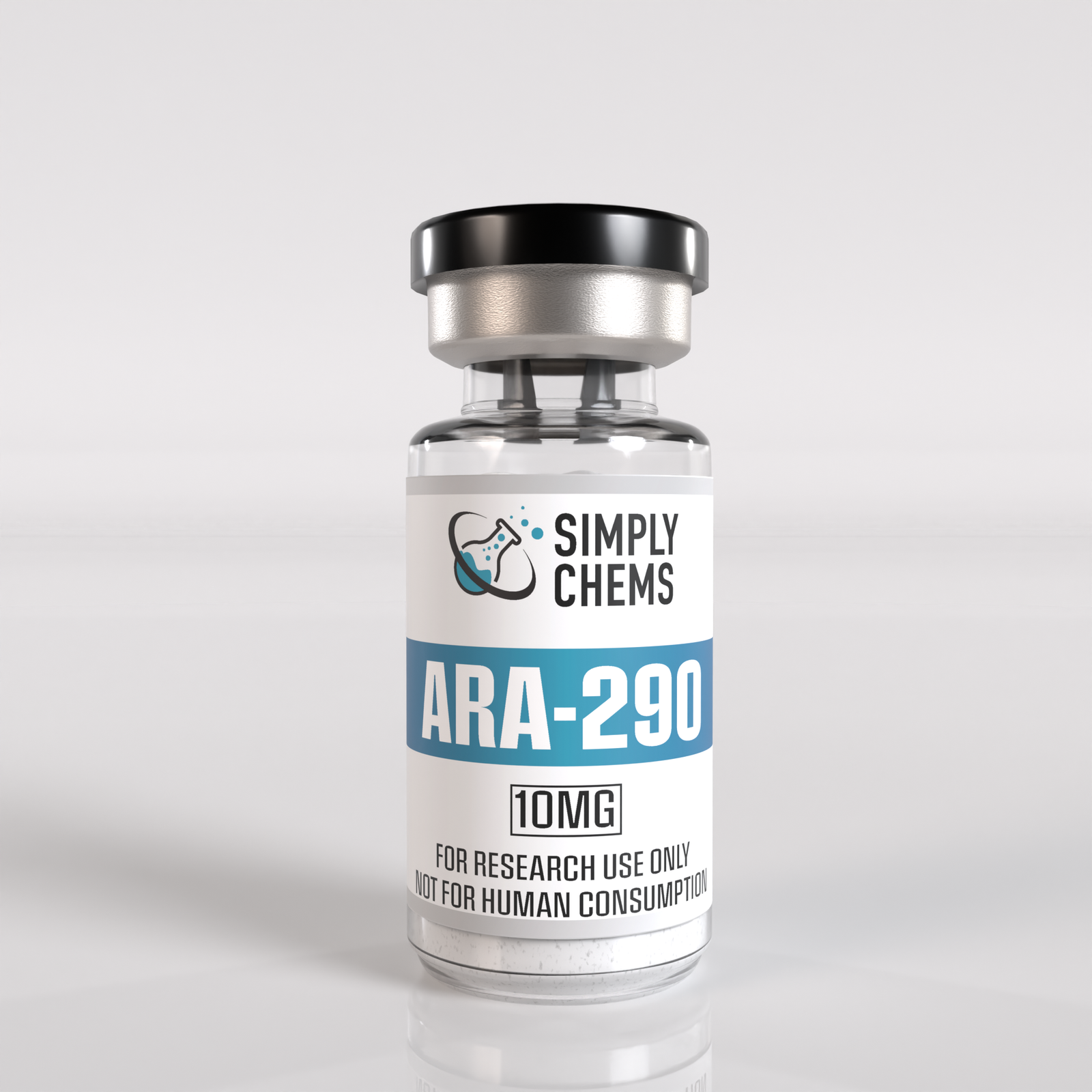
ARA-290 | 10mg
$24.99
ARA-290 is a synthetic peptide designed for advanced scientific research on tissue protection, nerve repair, and inflammatory response regulation. This vial contains high-purity ARA-290, intended strictly for laboratory and research use.
Out of stock
ARA-290 is a synthetic research peptide designed to help scientists study tissue protection, nerve repair, and inflammatory response regulation. What makes it unique is its structure as an 11-amino acid peptide derived from the tissue-protective domain of erythropoietin (EPO), allowing researchers to study tissue repair mechanisms without affecting red blood cell production. It selectively activates the innate repair receptor (IRR) pathway.
Because of this selective tissue-protective action, ARA-290 has become an important tool in research exploring:
-
Neuroprotection – how neural tissue responds to injury and maintains cellular integrity.
-
Inflammation modulation – how the body regulates inflammatory responses in damaged tissue.
-
Tissue repair mechanisms – how cells coordinate healing and regeneration processes.
Each vial contains high-purity ARA-290, formulated for consistency and reliability in laboratory settings. Researchers can use it to study complex biological processes that may eventually lead to a deeper understanding of neuropathic pain, diabetic complications, autoimmune conditions, and tissue regeneration.
This product is intended strictly for laboratory and scientific research only—not for human consumption or therapeutic use.
Technical Information
-
CAS Number: N/A
-
Molecular Weight (MW): ~1,500 g/mol
-
Synonyms: Cibinetide, EPO Analog
| Size |
20mg ,30mg |
|---|
| CAS Number | N/A |
|---|---|
| PubChem CID | N/A |
| Molecular Weight | 1,500 g/mol |
| Molecular Formula | C70H112N18O20S |
| Synonyms | Cibinetide, EPO Analog, pHBSP |
| Storage (Lyophilized) | Store in a cool, dry, and dark place. Refrigerate after reconstitution. |
Storage Instructions:
- Lyophilized (Powder): Store at -20°C in a cool, dry, and dark place.
- After Reconstitution: Refrigerate at 2-8°C and use within 14-30 days.
- Long-Term Storage: Freeze at -20°C in sterile aliquots. Avoid repeated freeze-thaw cycles.
- Handling: Use aseptic conditions in a laboratory setting.
ARA-290 is a synthetic research peptide designed to help scientists study tissue protection, nerve repair, and inflammatory response regulation. What makes it unique is its structure as an 11-amino acid peptide derived from the tissue-protective domain of erythropoietin (EPO), allowing researchers to study tissue repair mechanisms without affecting red blood cell production. It selectively activates the innate repair receptor (IRR) pathway.
Because of this selective tissue-protective action, ARA-290 has become an important tool in research exploring:
-
Neuroprotection – how neural tissue responds to injury and maintains cellular integrity.
-
Inflammation modulation – how the body regulates inflammatory responses in damaged tissue.
-
Tissue repair mechanisms – how cells coordinate healing and regeneration processes.
Each vial contains high-purity ARA-290, formulated for consistency and reliability in laboratory settings. Researchers can use it to study complex biological processes that may eventually lead to a deeper understanding of neuropathic pain, diabetic complications, autoimmune conditions, and tissue regeneration.
This product is intended strictly for laboratory and scientific research only—not for human consumption or therapeutic use.
Technical Information
-
CAS Number: N/A
-
Molecular Weight (MW): ~1,500 g/mol
-
Synonyms: Cibinetide, EPO Analog
| CAS Number | N/A |
|---|---|
| PubChem CID | N/A |
| Molecular Weight | 1,500 g/mol |
| Molecular Formula | C70H112N18O20S |
| Synonyms | Cibinetide, EPO Analog, pHBSP |
| Storage (Lyophilized) | Store in a cool, dry, and dark place. Refrigerate after reconstitution. |
Storage Instructions:
- Lyophilized (Powder): Store at -20°C in a cool, dry, and dark place.
- After Reconstitution: Refrigerate at 2-8°C and use within 14-30 days.
- Long-Term Storage: Freeze at -20°C in sterile aliquots. Avoid repeated freeze-thaw cycles.
- Handling: Use aseptic conditions in a laboratory setting.

Reviews
There are no reviews yet.